


Hidden Hunger: Spotting the Signs of Malnutrition and How Compassionate Home Care Can Help
Estimated reading time: 6 minutes
- Malnutrition is often hidden and develops gradually among older adults.
- Recognising signs early can prevent serious health issues.
- Addressing emotional and social barriers is as crucial as physical ones.
- More-Time Healthcare focuses on holistic care, including companionship at mealtimes.
Table of Contents:
- 1. The Hidden Epidemic in the Elderly
- 2. Key Signs Every Family Member Must Know
- 3. Overcoming Physical and Social Barriers to Eating
- 4. The More-Time Healthcare Approach to Holistic Nutrition
- FAQ
1. The Hidden Epidemic in the Elderly
Many older people were brought up to “make do” and not complain. They may tell you they are “fine” and “eat like a bird these days” as if it is normal. In reality, their body still needs adequate energy and protein to maintain strength, fight infections, and heal from everyday knocks.
Hidden hunger can develop gradually:
- A spouse dies, and mealtimes feel lonely.
- Arthritis makes carrying shopping and chopping vegetables difficult.
- Poorly fitting dentures make chewing meat painful, so they avoid it.
- Medication affects taste and appetite.
- Rising costs lead to cutting back on fresh foods.
Little by little, portions shrink. Meals become toast, biscuits, and tea. Clothes start to hang more loosely, but they say they are “just getting older”. This is how malnutrition quietly takes hold in people who may have a full fridge, devoted family, and a respectable pension.
In counties like Kent and Essex, and in older communities such as Romford and parts of London, there are thousands of older people living alone with exactly this mix of social and physical challenges. Recognising the early signs is essential.
2. Key Signs Every Family Member Must Know
Catching malnutrition early can prevent falls, hospital stays, and loss of independence. Here are some signs to watch for when you visit:
- Noticeable weight loss: Look for looser clothing, belts needing new holes, or rings slipping off. Encouragingly, you do not need scales to spot these changes.
- Declining strength and energy: Notice if your loved one struggles to stand up from a chair or walks more slowly than before. They may be “washed out” or need more daytime naps.
- Changes in eating habits: Watch for smaller portions, leaving food unfinished, skipping meals, or relying heavily on toast, biscuits, or ready meals.
- Food patterns at home: Be conscious of cupboards that rarely seem to change, out-of-date food in the fridge, or inadequate amounts of fresh fruit, vegetables, and protein.
- Poor wound healing and more infections: Look for bruises and skin tears that heal slowly, or frequent infections which might indicate underlying nutrition issues.
- Mood and behaviour changes: Increased irritability, confusion, or low mood warrant attention. Diminished interest in favourite foods or social occasions can also be a red flag.
Individually, these signs may be part of normal ageing. However, when several signs appear together, they can point to elderly malnutrition – and it is crucial to act.
3. Overcoming Physical and Social Barriers to Eating
It is easy to assume that if the fridge is full, the problem must be “picky eating.” In reality, malnutrition in older people is rarely a straightforward food issue. It is often a social and physical challenge.
Physical Barriers
- Painful Mouth or Teeth: Poorly fitting dentures, painful teeth, or difficulty swallowing can deter older people from meals. They may not mention the pain unless asked kindly.
- Mobility Problems: Standing in the kitchen, lifting pans, or reaching for shelves can be tiring or may feel unsafe. This often leads to reliance on quick, albeit nutritionally poor, meals.
- Long-term Health Conditions and Medication: Chronic conditions like heart disease, COPD, or confusion from dementia can suppress appetite or create intolerances that discourage proper meal consumption.
Social and Emotional Barriers
- Loneliness and Bereavement: “It doesn’t seem worth cooking just for me.” This feeling is common among older people, especially after losing a spouse. The absence of a dining companion can drain joy from mealtimes.
- Depression and Anxiety: Low mood hampers appetite and interest in food, leading to reliance on sweet or simplistic options rather than balanced meals.
- Pride and Independence: Many parents hesitate to “burden” their children, insisting they are eating well even when they struggle. They may prefer to keep their challenges to themselves.
Telling a parent to “just eat more” rarely works. Instead, the focus should be on removing barriers through practical help, emotional support, companionship at mealtimes, and an emphasis on dignity and independence.
4. The More-Time Healthcare Approach to Holistic Nutrition
At More-Time Healthcare, we understand that elderly malnutrition extends far beyond what is found on a plate. Our carers assist seniors throughout Kent, Essex, Romford, and London with a compassionate, unhurried approach that prioritises both nutrition and companionship.
Here’s How We Help:
Unhurried Visits Focused on the Person, Not Just the Task
- Notice subtle changes in weight, strength, and mood.
- Discuss your loved one’s thoughts about food in a relaxed setting.
- Provide gentle encouragement without pressure or judgement.
We view the whole person, considering their history, preferences, culture, and routines – not just their care needs.
Fresh, Nutritious Meals from Scratch – Not Just Microwave Dinners
- Prepare fresh, home-cooked meals tailored to your loved one’s preferences and capabilities.
- Adapt meals for chewing or swallowing difficulties, offering softer textures or minced dishes.
- Create smaller, frequent meals and snacks that provide energy without overwhelming the appetite.
- Revive cherished family recipes, linking food to memories and delight.
From wholesome stews to vibrant vegetable omelettes, we strive to deliver meals that are both nourishing and genuinely enjoyable.
Companionship at Mealtimes – Because Eating Together Matters
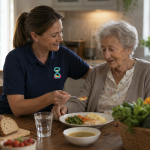
- Sit with your loved one during meals, sharing pleasant conversation to create an enjoyable atmosphere.
- Set the table, serve food attractively, and ensure meals are relaxed and stress-free.
- Transform solitary meals into moments of joy and connection, which can significantly improve appetite and mood.
Monitoring, Communication, and Early Action
- Monitoring food and liquid intake consistently, identifying trends and changes.
- Noting shifts in weight, strength, mood, or wound healing.
- Sharing these observations (with consent) with family members and urging coordination with healthcare providers when necessary.
This cooperative approach not only eases family anxieties but allows for proactive management of any arising issues.
Practical Support That Protects Independence
- Grocery shopping – accompanying your loved one, assisting with online orders, or handling shopping tasks, whatever suits best.
- Keeping food in order, ensuring the fridge and cupboards are well-stocked and safe.
- Facilitating easy access to nutritious snacks and drinks that are ready when needed.
Our mission is to maintain independence for as long as possible, quietly providing the support necessary for good nutrition in meaningful ways.
If you are worried about elderly malnutrition in Kent, Essex, Romford, or London, we can help. Don’t manage this challenge alone; your concern about a parent’s nutrition reflects your genuine care.
If you are worried that your loved one is not eating well or seems unusually weak, don’t wait. Contact us today for a free consultation to discuss a tailored nutritional care plan.
FAQ
What are the signs of malnutrition in older adults?
Common signs include noticeable weight loss, declining strength, changes in eating habits, and poor wound healing.
How can I help my elderly loved one with their nutrition?
Providing companionship during meals, addressing emotional barriers, and ensuring access to nutritious foods are key steps.
What resources are available for elderly care?
Services like More-Time Healthcare offer personalised nutritional care and support for older adults living at home.